Welcome to Jean Robinson Design. I am Jean Robinson, I live in San Antonio, Texas, and operate a landscape architectural design business for San Antonio and environs. I meet with you on site at no charge, to discuss your project and provide an estimate for my services.
My love of design sprung from a passion for native Texas plants-plants from here. Our chances of a successful landscape greatly increase when we take advantage of the plants that already know how to survive here without our intervention!
My love of design sprung from a passion for native Texas plants-plants from here. Our chances of a successful landscape greatly increase when we take advantage of the plants that already know how to survive here without our intervention!
I provide both residential and commercial design as well as consulting services. I am interested in, and driven by the concept of sustainability and care for our local ecosystem. By incorporating native plants and sustainable practices such as low water use into my designs, I help you contribute to the health and balance of our environment. Your payback is a lower water bill and less work! The more we work with nature instead of against it, the easier the task!
My range of services include residential landscape design (front yard design, backyard design or both), commercial landscape design, informal design sketches, illustrative site plans, horticultural consultation and related services. Drawing on my design education and knowledge of Texas native plants, I create outdoor rooms that are both inviting and easy to maintain. With good design and the right plant palette, I create a "sense of place" in your landscape.
PLANT OF THE MONTH
November, 2023
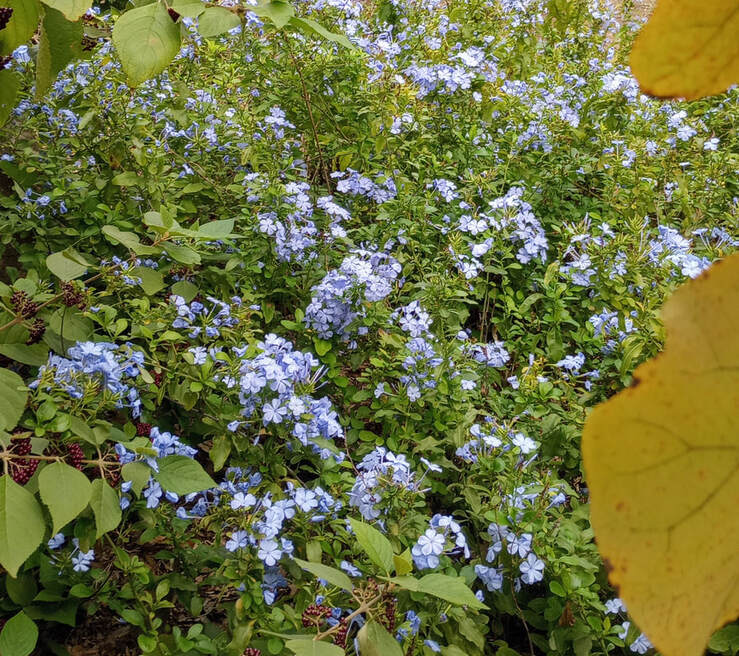
I've never seen my Plumbago (Plumbago auriculata) look as lush and vivid as this fall after our "Survival of the Fittest" summer. Although a non-native from South Africa, its performance here makes it look a lot like a Texan!
DESIGN TIP OF THE MONTH
|
|
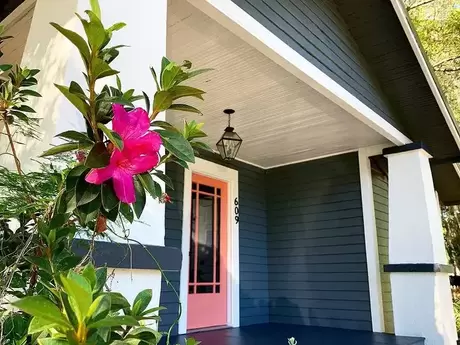
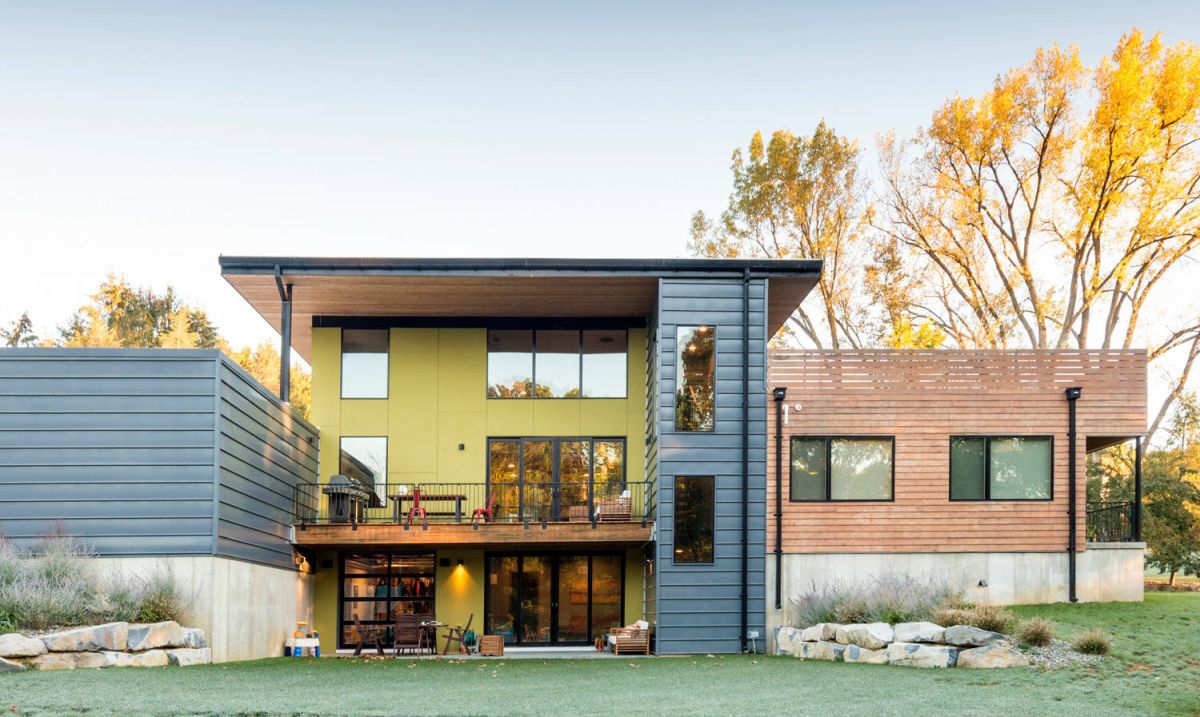
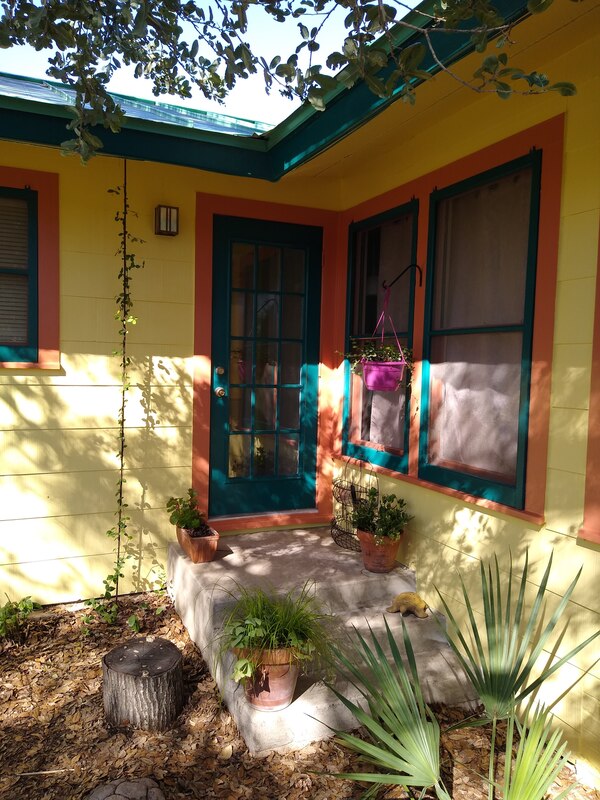
As a designer, I certainly do not consider it cheating to add color to the landscape through good house colors. It all counts! And it's something that doesn't have to be watered! And it looks good at the end of a week of snow or a summer of no rain and daily 100 degree temperatures. Very convenient! Why put up with default neutrals when you can add color that actually contributes something to your landscape?
Strong colors stand up to our bright sun, adding style and a sense of place to your property. In general, a minimum of three colors (besides white) are good, and can produce a very satisfying effect. You can always experiment on the back of your house before you call the painter!
Strong colors stand up to our bright sun, adding style and a sense of place to your property. In general, a minimum of three colors (besides white) are good, and can produce a very satisfying effect. You can always experiment on the back of your house before you call the painter!
unusual sight of the month
November, 2023
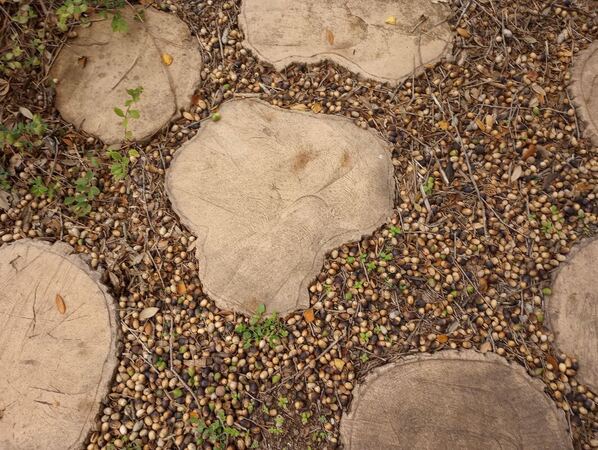
As you may have noticed, our oaks have gone into major acorn production. My hunch is, it's a survival mechanism. This reminds me of the time I brushed by my Cenizo and partially broke off a branch. When I returned a few days later, the little branch was covered in flowers, while the rest of the shrub had none at all. Very interesting!